
- Home
- Cleaning Services
- Carpet Cleaning
Carpet Cleaning That Starts With a Dry Vacuum Pass
Hot water extraction on residential and commercial carpet, with the dry soil vacuumed out before any water goes down and a straight read on which marks are soil and which are worn fiber.
Most of what is in a carpet is dry, and it is sharp. Sand, grit and the fine mineral dust that blows off a road settle down at the base of the pile, where they cut the fiber a little more every time somebody walks across the room. Run a wet wand over that and you have made mud, which dries back into the backing instead of leaving in the recovery tank. So the first thing that happens is a slow vacuum in two directions, and it takes longer than the vacuuming anybody does at home. After that the pre spray goes down and it sits. Dwell time is not a pause in the work, it is the work, because the chemistry needs those minutes to break the bond between the soil and the fiber. No amount of heat at the wand buys them back.
Next comes a brush through the walkways, since product resting on the tips of the pile has not reached the part that is dirty. Then extraction itself: hot water in and solution straight back out on the same stroke, overlapping, followed by dry strokes over the same ground with no trigger, which is where most of the water actually leaves. Winter tells you where to spend the hours. Once the road treatment starts in late fall and until it stops in spring, everything the trucks put down rides in on boots and concentrates in roughly the first six feet inside each door. Salt is what lingers after the sand is swept up, and salt pulls moisture out of the air, so that stretch of floor stays faintly damp and picks up new soil faster than the rest of the room does.
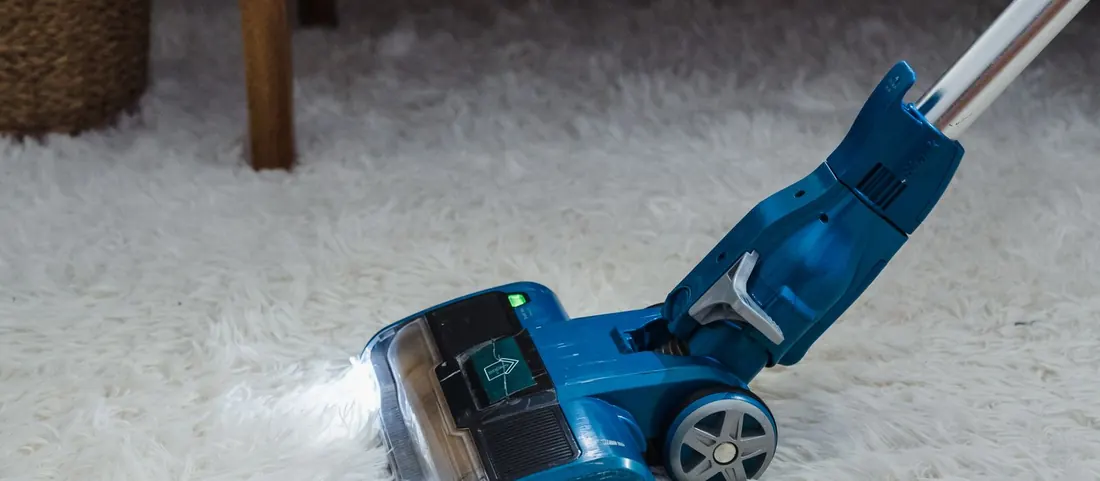
What the visit covers
- Vacuum dry soil out in two directions before any water
- Pre spray the walkways and give the product its dwell time
- Brush the lanes so product reaches the base of the pile
- Block furniture legs so wood and metal do not mark the pile
- Extract with overlapping wet strokes, then repeat them dry
- Treat spots by type instead of one bottle for everything
- Rinse back to a neutral pH so the carpet resoils slower
- Groom the pile so it dries standing up instead of flattened
- Set air movers and say when the room is safe to walk on
- Flag pet urine that has gone through into the pad
Drying time, wicking and pet urine
Here is why a spot you watched disappear is back on Wednesday. If the carpet was left too wet, whatever is sitting down in the backing travels up the yarn with the moisture as it dries and redeposits at the tips, which is the only part of the fiber you can see. That is wicking. It is an over wetting problem, not a product problem, and the cure is taking more water out at the wand, dry stroking the same path, and pushing air across the floor until the pile gives up its humidity. Most rooms take a few hours before light traffic and are dry overnight. A ground floor room in August with the windows open takes considerably longer than a heated house in February. If a mark does surface again, call us, because a second and drier treatment on that one spot usually ends it.
Pet urine is a separate job with separate rules. By the time you can smell it, the liquid has already gone through the backing into the pad and often into the subfloor, so cleaning the face of the carpet treats maybe a third of what is actually there. The salts left behind draw water out of humid air, which is why a room smells worse in July than it did in March. Reaching the problem means getting product down into the pad rather than onto the yarn, sometimes through a subsurface tool, sometimes by pulling a section of carpet back and treating the pad and the boards underneath. We check how far it went before pricing anything. Carpet installation runs out of this same company, so when the honest answer is new carpet in that room, you get a number for it instead of three visits that never settle the smell.
About carpet cleaning
If your question is not here, call and ask. We would rather tell you a smaller job is enough than sell you a bigger one.
How long before we can walk on it?
Plan on a few hours before light traffic and overnight before the furniture goes back where it was. Humidity decides the rest. A dry heated house in February gives the moisture up quickly, and a first floor room in August holds it much longer. We leave air movers running and tell you which rooms to stay off. Socks on damp carpet carry soil straight back in, so bare feet or clean shoes until the pile feels dry.
Why did the stain come back the next day?
That is wicking, and it means too much water was left in the carpet. The original spill soaked into the backing long before anybody cleaned it. As moisture rises back toward the surface during drying, it carries the leftover material up with it and parks it at the top of the fiber, exactly where you can see it. It is fixable. One more treatment on that spot, drier than the first, normally takes it for good.
Can you make the walkway match the rest of the room?
Sometimes, and you will hear which case you have before we start rather than after we fail at it. If the lane is dark because soil is packed down in the pile, extraction pulls it out and the color comes back. If that lane has been walked for years, the fiber is abraded and the yarn has untwisted, so the gray is scratched fiber catching light. Nothing removes wear. Cleaning still helps, it just will not read the same as the carpet under the couch.
One price for carpet cleaning, agreed before anyone starts.
Half an hour at the property, at no charge, and you walk away holding the room by room list and one number.