
- Home
- Masonry Services
- Chimney Repair & Rebuilds
Chimney Repair That Starts at the Crown
Crowns, caps, spalled brick above the roof line and the flashing where the stack meets the shingles, repaired or rebuilt after somebody gets on the roof and finds where the water is actually getting in.
A chimney takes weather on four sides and has nothing over it but a slab of concrete. That slab is the crown, and it is the first thing to go. Poured right, it is thick, sloped away from the flue, and it overhangs the brick with a drip edge so runoff leaves the wall instead of running down the face. Most of the ones we find are a thin skim of mortar troweled flat to the brick edge. They craze and crack within a few winters, water goes straight into the top of the stack, and from then on the brick is soaking from the inside where nobody can see it. A cracked crown is cheap to correct and expensive to leave alone, because almost everything else on this page begins there.
People use crown and cap for the same thing and they are not the same thing. The crown is the masonry slab that seals the top of the stack around the flue. The cap is the metal hood that sits over the flue opening to keep rain, snow and animals out of the flue itself. A stack needs both, and one with a sound crown and no cap is still taking water straight down the middle. Above the roof line the brick has weather on every face and no heat behind it, so that is where damage shows first: faces letting go in flat chips, joints raked open, the top few courses soft enough to rock by hand. When brick has gone that soft, repacking joints is the wrong repair. Taking those courses down and rebuilding them is the one that holds.
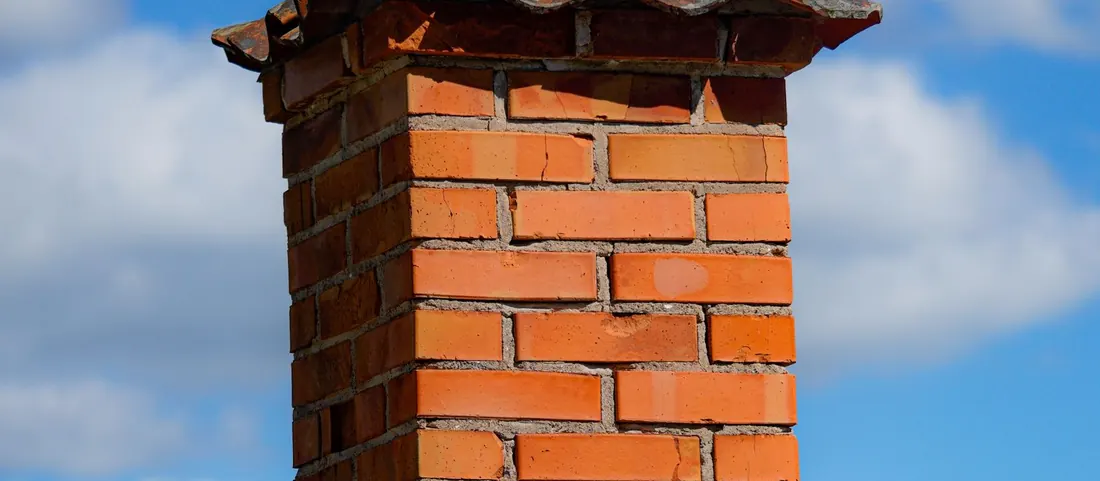
What the visit covers
- Inspect the crown, cap, flashing and the brick above the roof
- Pour a new crown with a slope and a drip edge past the brick
- Set a stainless cap over the flue to keep rain and animals out
- Replace spalled brick above the roof line, unit by unit
- Rebuild the top courses when the stack has gone too soft
- Replace step flashing and counterflashing cut into the joint
- Point open joints from the roof line up to the crown
- Rebuild the shoulder and the wash where the stack steps in
- Take a stack down to the roof and rebuild it where needed
- Hand off liner, flue and sweep work to a certified specialist
Where our work stops and theirs starts
Most chimney leaks are not the chimney. They are the flashing, the metal that ties the stack to the roof. It comes in two pieces: step flashing woven into the shingle courses, and counterflashing cut into a mortar joint and folded down over the steps. Roofers replace shingles and reuse tired counterflashing. Masons point the joint and bed the metal in sealant rather than cutting a fresh reglet. Either shortcut leaves you the same weak point, and a bead of caulk buys two or three years before the stain comes back. If there is a brown ring on a bedroom ceiling near the chase, or damp on the wall where the chimney passes through the house, that intersection is the first place we look, well before anyone talks about rebuilding brick.
We are masons. Our scope is the structure: brick, crown, shoulder, flashing and cap. We do not sweep flues, we do not run a camera down a chimney, and we do not size or install liners. That work belongs to a certified chimney professional, and when your stack needs one we say so and stay out of the way instead of taking the whole job. If a liner is going in anyway, it goes in before we close up the crown, so tell us early and we schedule around it. Crowns and stack rebuilds happen in any month. Fresh mortar up there needs warmth to gain strength, so cold weather work gets a heated enclosure on the staging, warmed materials and insulated blankets over the new joints until they set. A stack actively pouring water gets tarped the day we see it and a start date, not a place on a waiting list.
About chimney repair
If your question is not here, call and ask. We would rather tell you a smaller job is enough than sell you a bigger one.
Water is staining the ceiling near my chimney. Where is it from?
More often than not it starts at the roof line, not at the top. Step flashing and counterflashing are what seal a stack to the shingles, and old metal bedded in caulk fails quietly. After that we check the crown for cracks, then the joints on the stack, then whether there is a cap over the flue at all. We get on the roof and look before quoting a leak, because guessing means you pay to fix the wrong thing.
What is the difference between a chimney crown and a cap?
The crown is masonry. It is the sloped slab covering the top of the stack around the flue tiles, and its job is to throw water off the brick. The cap is metal, a hood over the flue opening with mesh sides, and its job is keeping rain, snow and squirrels out of the flue. You want both. Plenty of the stacks we look at have a cracked crown and no cap at all, so water is getting in from two directions at once.
Do you install chimney liners?
No. Sizing and installing a liner belongs to a certified chimney professional, along with sweeping and internal inspection, and we will not blur that line to keep a job. What we handle is the masonry: crown, cap, flashing, spalled brick, open joints, and rebuilding the top courses or the whole stack above the roof. If you need both scopes, we can work our dates around the liner installer so nothing gets opened up twice.
One price for chimney repair, agreed before anyone starts.
Half an hour at the property, at no charge, and you walk away holding the room by room list and one number.