
- Home
- Flooring Services
- Hardwood Floor Refinishing
Refinishing That Starts With What Is Left to Sand
Old oak and pine read before anybody starts a machine, because a board sanded three times already may want a screen and recoat instead of another full pass with a drum.
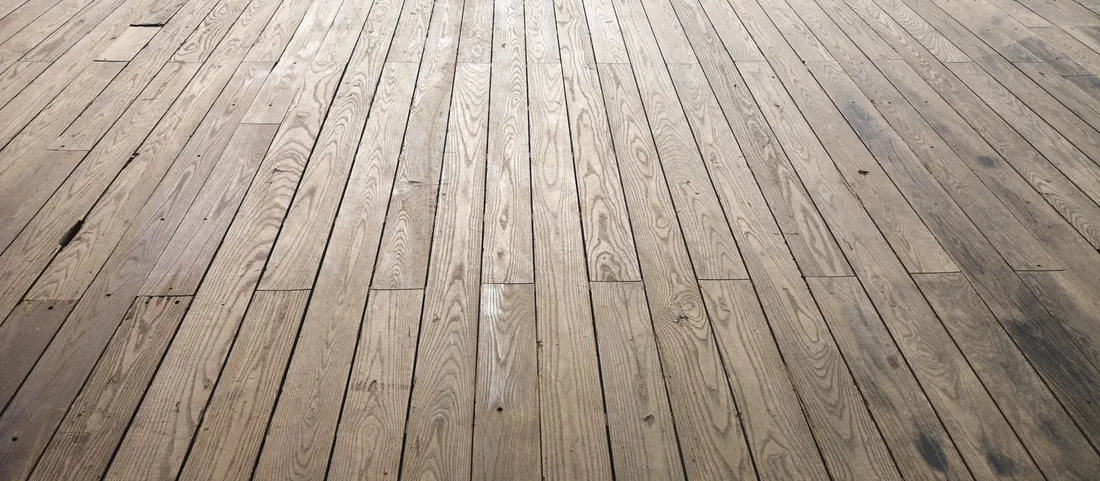
A three quarter inch strip floor is not three quarters of an inch of usable wood. The tongue sits roughly a quarter inch down from the surface, and everything below it belongs to the nails and the subfloor. So the honest number on an old floor is what sits above that tongue, and in a house in Lowell or Andover put up around 1900 the answer is often thinner than people hope, because two or three owners already took a pass at it. We pull a heat register or lift a threshold and look at the edge of a board where you can see the real section. Sometimes there is plenty left and a full sand is easy to justify. Sometimes there is an eighth of an inch, the nail heads are close enough to catch, and the right call is to leave the wood alone.
That is the difference between the two jobs on this page. A full sand takes the floor down past the old finish and past the wear, with a drum or a belt machine running the field and an edger working the perimeter, and it costs you thickness you never get back. A screen and recoat leaves the wood where it is. We abrade the existing finish just enough for the new coat to bite, clean it down, and lay fresh finish over the top. It will not remove a deep scratch, it will not pull a gray water stain out of the grain, and it will not change the color. What it will do is put a sound wear layer back on a floor that still has its surface, for a fraction of the money and in about half the time. When a floor can take a recoat, we say so, because that answer is worth more to you than the bigger invoice.
What the visit covers
- Check the wear layer above the tongue before quoting a sand
- Pull a register or a threshold to read the real board section
- Set every proud nail head below the surface before machines run
- Run the field with a drum or belt, then edge the perimeter
- Scrape and hand sand the corners, closets and stair returns
- Fill open gaps and checks where filling is the right answer
- Screen and recoat instead of sanding when the finish is sound
- Seal the doorways and run the machines through containment
- Lay water based or oil based finish in the coats agreed
- Ask about lead before sanding any painted trim or edge
Dust, finish and when furniture returns
Sanding a floor throws fine dust into every part of a house, and no vacuum on a machine catches all of it. It lands on top of door casings, inside closets, on the backs of radiator fins and on whatever you left sitting out down the hall. So we seal the openings with plastic and zippers, run the machines on dust collection, and keep the containment up until the last coat is down. That also decides the order of the whole project. Floors get sanded before the walls get painted and before the final clean, never after. A homeowner who paints first and sands second pays for the paint twice, and a cleaner sent in ahead of the drum is cleaning a room that is about to be covered again. Because painting and cleaning come out of this same office, that sequence gets written into the schedule instead of discovered on site.
Finish is the other decision and it changes your calendar more than the color does. Water based finishes go down clear, dry fast enough to put several coats on in a day, and carry less odor through the building. Oil based finishes take longer between coats, amber the wood a little, and need real ventilation while they cure. Either way, dry and cured are not the same thing. You can usually walk a floor in socks the next day, but rugs and furniture felt pads should wait, and the heavy pieces want longer than that. We write the finish type, the number of coats and the wait before each stage into the scope so you can plan the move back in. Ask us before you book the movers, not after, because a sofa dragged across a soft coat leaves a mark nothing short of another recoat will take out.
About hardwood floor refinishing
If your question is not here, call and ask. We would rather tell you a smaller job is enough than sell you a bigger one.
How do I know if my floor can be sanded again?
We look at the section, not at the surface. Pulling a floor register or lifting a threshold usually shows the edge of a board, and from there you can see how much wood sits above the tongue. Nail heads starting to show in the traffic lane tell the same story. If there is enough left, a full sand is honest work. If there is not, we will quote a screen and recoat and tell you plainly that this floor has one pass left in it.
My boards have gaps in the winter. Will sanding close them?
No, and filling them solid is usually the wrong move. Wood gives up moisture when the heat runs dry from December through March, so the boards shrink and the gaps open. Come July the basement is damp, the wood takes moisture back, and those gaps close on their own. Fill them tight in February and the wood has no room left when the damp comes back in August, which is how you get cupping and crushed edges. We fill what stays open all twelve months and leave the ones that open and close alone.
My house is older. Does sanding raise a lead question?
It can, so we raise it before a machine comes out. A pre 1978 house can have lead sitting in older paint layers, and while the field of a floor is bare wood under the finish, painted treads, a painted border or the trim along the edge are a different question. We claim no certification for that work. We ask what you know, we schedule around it, and when a test makes sense we will say so before a sander runs.
One price for hardwood floor refinishing, agreed before anyone starts.
Half an hour at the property, at no charge, and you walk away holding the room by room list and one number.