
- Home
- Masonry Services
- Repointing & Tuckpointing
Repointing That Matches the Brick You Already Have
Failed mortar joints cut out to depth and repacked with a mix matched to the brick you already have. Priced after we read the wall, scheduled in the months mortar can actually cure.
Mortar is designed to fail before the brick does. It is the soft part of the wall, and it is supposed to be, because a joint that gives is a joint that takes the movement instead of cracking the brick face. Here that clock runs fast. Water gets into an open joint in November, freezes, expands, and pushes the face of the mortar out a little further each cycle. By the third or fourth winter the joint is raked back on its own, the wall is drinking water, and the brick faces above the failed line start popping off in sheets. That last part is the expensive one, because spalled brick has to be cut out and replaced, and matching a hundred year old brick is a different job from repacking a joint.
The other half of the problem is what somebody smeared over it last time. Modern portland cement mortar is harder than the brick in most older buildings in this valley, so when the wall moves the brick loses. You end up with a facade that was repointed ten years ago and is now shedding faces around perfectly intact joints. Reading that before quoting is the whole job. We look at what the brick is, what the existing mortar is, how deep the joints have actually failed, and whether the trouble is the wall or the gutter dumping onto it. Then you get a number and a written scope, not a guess from the sidewalk.
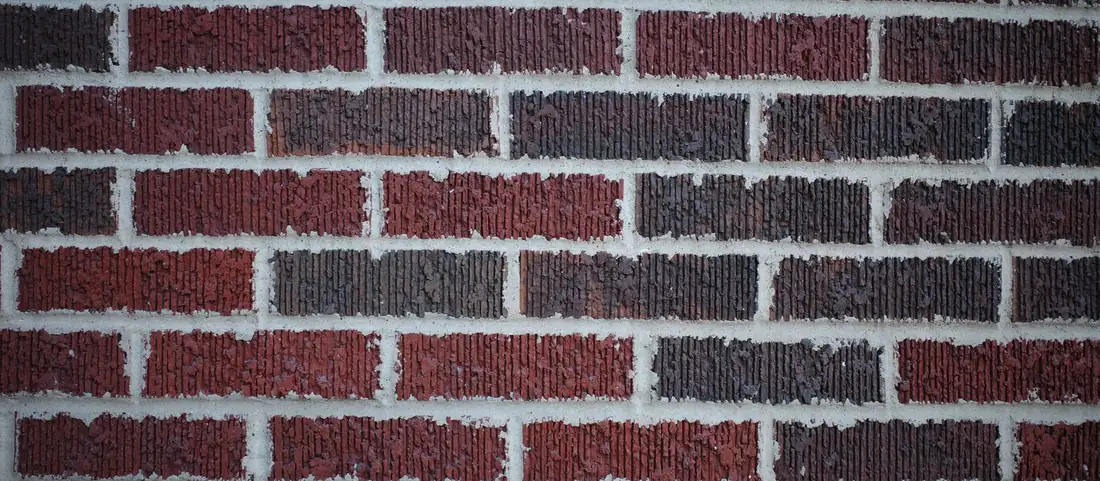
What the visit covers
- Read the wall first: brick type, existing mortar and the real failure depth
- Cut joints back to sound mortar, generally two to two and a half times the width
- Grind and chisel without cutting into the brick arris or widening the joint
- Match the mortar for color, texture and hardness to the brick, not to convenience
- Repack in lifts and tool the joint profile to match the original wall
- Cut out and replace spalled or split brick where the face is already gone
- Rebuild failed sills, water tables and the courses under them
- Point around windows and doors where the sealant has pulled away
- Wash the wall down and clear the mortar out of the joint face
- Flag the gutter, downspout or grade that is soaking the wall in the first place
Why the calendar decides the start date
Fresh mortar has to hydrate before it can survive a freeze, and mortar that freezes green never gets its strength back. In warm months that happens on its own and the job is straightforward. In the cold it has to be engineered: warmed sand and water, a mix built for low temperature cure, a heated enclosure over the working face, and insulated blankets left on the fresh joints long enough for them to gain strength before the first hard night. That is how winter repointing is done properly, and it is what separates a wall that holds from one crumbling under a thumbnail by spring. It costs more than the same wall in June, so we put the winter number and the spring number side by side and you choose.
Scope is written before anybody sets up staging. Square footage or linear footage of joint, how many brick have to come out and be replaced, what happens at the sills, and what we are not touching. If the wall opens up and there is more failure behind it than the surface showed, you hear about it that day with a price for the change, and you decide before we keep going. Because painting runs out of the same company, a facade that needs pointing and then trim work gets sequenced properly instead of one crew painting over what the other one is about to open up.
About repointing
If your question is not here, call and ask. We would rather tell you a smaller job is enough than sell you a bigger one.
How do I know if my brick needs repointing?
Run a key or a screwdriver along a joint. If the mortar crumbles out as sand, or you can push the tip in more than a quarter inch without much effort, the joint is done. Other signs are joints that have raked back so the brick edges stand proud, white powder on the face of the wall, damp on the inside of an exterior wall, and brick faces flaking off in thin sheets. The last one means water has already been getting in for several winters.
Why does the mortar mix matter so much?
Because mortar has to be softer than the brick around it. Most older brick in this valley is relatively soft, and if you point it with a hard modern portland mix, the wall still moves but the mortar will not, so the brick face takes the load and pops off. Matching means color and texture so the repair does not read as a stripe across your facade, and hardness so the wall keeps failing in the right place, which is the joint.
Can you repoint a chimney or just a wall?
Both, and chimneys usually come first because they take weather on all four sides and have a crown on top that cracks. A chimney that is losing joints above the roof line is also dropping water into the flue and the framing around it. We handle the pointing, the crown and the cap on the same visit, and we tell you honestly when a stack has gone far enough that rebuilding the top courses costs less than pointing them twice.
One price for repointing, agreed before anyone starts.
Half an hour at the property, at no charge, and you walk away holding the room by room list and one number.